Valves
Gas Valves
Our range of gas valves provides safe and reliable isolation and flow control for industrial, high purity and ultra high purity gas systems. As an authorised UK Rotarex distributor, we supply Rotarex cylinder valves and line valves for applications ranging from standard industrial gas cylinders through to high-purity laboratory, analytical and semiconductor processes. The range includes diaphragm valves, tied diaphragm valves, bellows valves, check valves and UHP springless diaphragm valves for gas panels, manifolds and distribution systems, together with cylinder valves for standard, specialty and corrosive gas service.
Choosing the right valve depends on where it is installed, the gas being controlled and the required purity level of the application. Whether you require a cylinder valve for gas storage and delivery or a line valve for gas panels and process pipework, the categories below provide further information on each valve type and its intended use. Individual product pages include detailed specifications covering orifice sizes, seat options, pressure ratings and actuation methods, helping you select the most suitable valve for your gas system.
Valves by Type
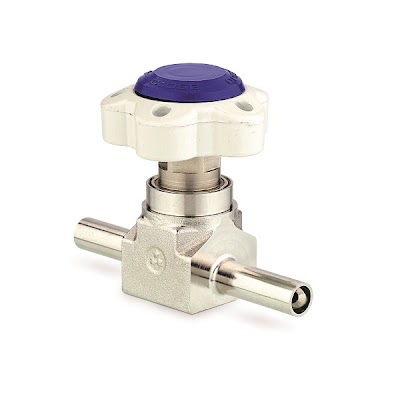
Industrial & High Purity Line Valves
Line valves for gas panels, manifolds and pipework in industrial and high purity service: manual and pneumatic tied diaphragm line valves with soft or knife edge seats, high performance bellows valves for low to high pressure, and check valves for oxidising, inert and flammable gases. All Rotarex.
12 products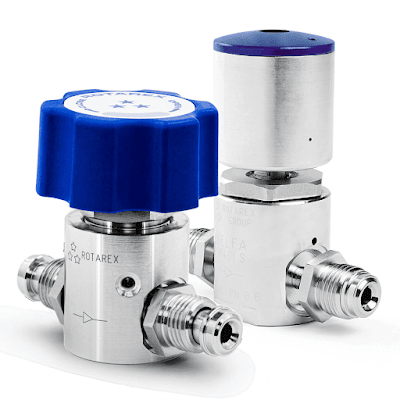
UHP Line Valves
Springless diaphragm line valves for ultra high purity gas systems, in a range of flow capacities and connection sizes.
4 products
Industrial Cylinder Valves
Standard cylinder valves for industrial gases, CO2 valves, residual pressure valves that keep a positive pressure in an empty cylinder to stop contamination, and stainless steel valves for corrosive gases. Rotarex, in the standard outlet connections.
4 products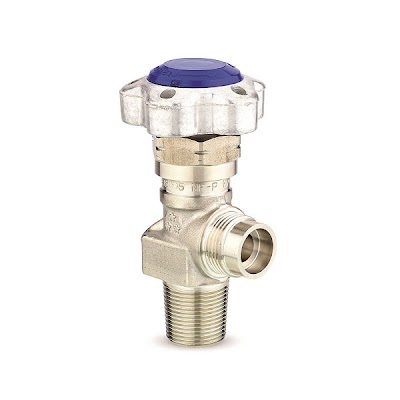
High Purity Cylinder Valves
Packed stem cylinder valves for high purity and corrosive gases, in a manual version and a pneumatically actuated version, built so the gas never reaches the operating mechanism.
2 products
UHP Cylinder Valves
Ultra high purity tied diaphragm cylinder valves in the Rotarex D3 series: manual and pneumatic, single and dual port, metal to metal or soft seat, orifice sizes from 4 mm to 8 mm, with variants for fluorine mixes and low pressure service. Built for the highest purity cylinder gases.
13 productsCommon questions
- What does Cv mean on a valve specification?
- Cv is the flow coefficient, a single number for how much flow a valve passes at a given pressure drop. A higher Cv means less restriction. It is the figure to compare when two valves will fit the same line and you need to know which will pass the flow. Across the valves listed here Cv runs from 0.2 on the smallest ultra high purity line valve to 114 on the largest bellows valve seat.
- Why is a helium leak rate quoted on gas valves?
- Helium is the test gas because its small molecule finds leaks that other gases pass over. A figure such as 1 x 10⁻⁸ mbar litres per second is the maximum leakage the valve is tested to. It says nothing about which gas the valve is for. It is the clearest single measure of how well a valve seals, which is why high purity and ultra high purity valves publish it and ordinary valves often do not.
- What is the difference between a bellows valve and a diaphragm valve?
- Both seal the gas away from the stem and from the operator, but by different means. A bellows valve uses a metal bellows that extends and compresses as the stem moves, which suits larger seats and higher flows. A diaphragm valve uses a thin metal diaphragm, which gives a very small internal volume and a very low leak rate, so it is the usual choice for high and ultra high purity gas.
Not sure what you need?
Send us the gas, the pressure and the connection and we will come back with the right unit.
Contact Us